
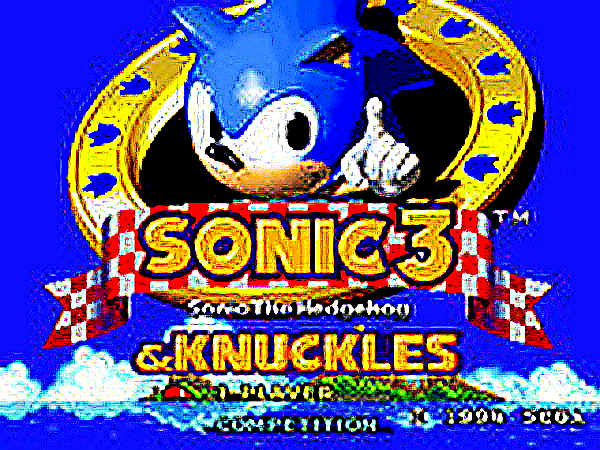
Sonic 3 and Knuckles Classic Platformer
What players say
Sonic 3 and Knuckles Classic Platformer succeeds because it treats the two source games as one continuous campaign rather than a collection. The character selection between Sonic, Tails, and Knuckles meaningfully changes how stages are navigated, and the competition mode adds a social dimension that the original standalone releases lacked. The improved graphics sharpen the presentation without sacrificing the retro charm. Players who enjoy precise platforming and route optimization will find the most value here, though those seeking a purely casual experience may find later zones demanding.
How to play
A Merger of Two Genesis Classics
Sonic 3 and Knuckles Classic Platformer is not a remake or a remaster but a physical and logical union of two separate Sega Genesis cartridges released in 1994. The original Sonic 3 and Sonic & Knuckles were designed to connect, and this version presents that combined campaign as a single continuous experience. The result is a longer, more coherent journey through Angel Island, a floating landmass whose mysterious power is tied to the Chaos Emeralds. Dr. Robotnik has survived his previous defeat, and his crashed space station sets the opening scene for a fast-paced run across vibrant zones.
Playing as Three Different Characters
Players select Sonic, Tails, or Knuckles before each zone. The choice changes how levels are approached. Sonic relies on speed and his spin attack. Tails can fly for short bursts, reaching platforms that others cannot. Knuckles climbs walls and glides, opening alternate routes through Sonic 3 stages that were originally designed without him in mind. This character-specific traversal is the game's most meaningful decision point, because the same stage can play very differently depending on who is selected. The core loop remains consistent: run, jump, and roll into enemies, collect rings for protection, and locate hidden Chaos Emeralds to access special stages.
Competition Mode and Replay Value
A two-player competition mode allows races through selected zones. This mode uses split-screen racing rather than cooperative play, and it rewards players who memorize shortcuts and optimal paths. The inclusion of competition adds a social layer to an otherwise single-player campaign, and it extends the game's lifespan beyond the main story. The graphics have been improved over the original releases, sharpening the visual presentation while preserving the retro aesthetic that defines the Genesis era.
Approaching the Challenge
Success depends on ring management and level familiarity. Rings act as a buffer against damage, and losing all of them costs a life, so maintaining a healthy count is more important than raw speed. Spin attack timing matters in tighter sections, where enemies and obstacles are placed to punish careless movement. Chaos Emeralds are hidden within the levels themselves, and finding them requires exploration rather than simply racing to the goal. In competition mode, the advantage goes to the player who has studied the zone layout and knows where the fastest routes are.
✅ Compatibility & Testing
FAQ
Comments
Sign in to comment
You must be logged in before posting a review or rating.
No comments yet. Be the first to comment!



Editorial Notes