
Fresh Math Puzzle Challenge
What players say
Fresh Math Puzzle Challenge works best as a short, repeatable practice tool rather than a deep game. The 60-second timer and procedural question generation combine to create a loop that resists memorization and encourages genuine mental calculation. Its minimal interface and lack of inappropriate content make it accessible for students, adults, and families. The main limitation is scope: it covers addition, subtraction, and multiplication only, so players seeking broader math practice will need additional resources.
How to play
The 60-Second Arithmetic Sprint
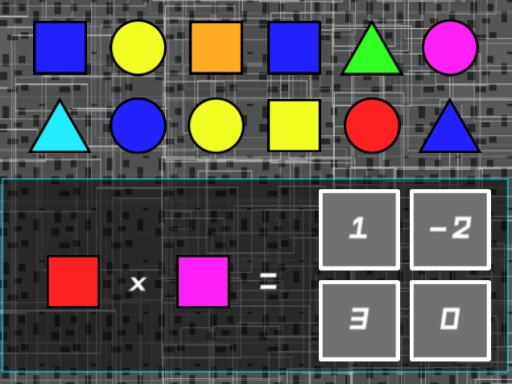
Fresh Math Puzzle Challenge strips arithmetic practice down to a single, focused loop: a question appears, you answer it, and the next one loads immediately. A round lasts exactly 60 seconds, and your score depends on how many correct answers you can produce before time runs out. Wrong answers earn nothing, so the scoring rewards precision as much as speed. Because the clock never pauses between questions, every second spent hesitating directly reduces your final total.
Procedural Question Generation
Rather than pulling from a fixed question bank, the game generates a new set of problems each round. That design choice has a practical consequence: you cannot memorize answer keys or pattern-match your way to a high score. Every session forces you to actually compute the arithmetic. The questions cover addition, subtraction, and multiplication, which means a single round can shift between operations without warning, testing your ability to switch mental strategies on the fly.
Controls and Accessibility
Players input answers using a keyboard or mouse, and the interface is deliberately minimal so nothing competes with the question on screen. There are no complex menus, no unlock systems, and no prior knowledge required beyond basic arithmetic. This low-friction setup makes the game approachable for students building foundational skills and for adults who want a quick mental workout during a break.
Who Gets the Most From It
The 60-second format suits short, repeatable practice sessions rather than long play. Families can use it as a shared activity since the content stays strictly focused on arithmetic with no inappropriate material. The real skill ceiling comes from balancing speed against accuracy: rushing leads to careless errors, while overthinking burns the clock. Players who practice regularly tend to build both calculation speed and confidence with core operations.
Compatibility
FAQ
Comments
Sign in to comment
You must be logged in before posting a review or rating.
No comments yet. Be the first to comment!



Editorial Notes