
Draw Climber Puzzle Racing
What players say
Draw Climber Puzzle Racing succeeds by making the player's own sketch the central puzzle piece. The box cannot move without your drawn legs, so every level becomes a test of shape, length, and balance. The physics engine adds believable weight to each attempt, turning failure into useful feedback. Its one-touch controls and offline support suit young players and casual sessions. The main limitation is the lack of narrative or characters, but the core loop stays engaging through progressive obstacles.
How to play
Sketching Your Way Forward
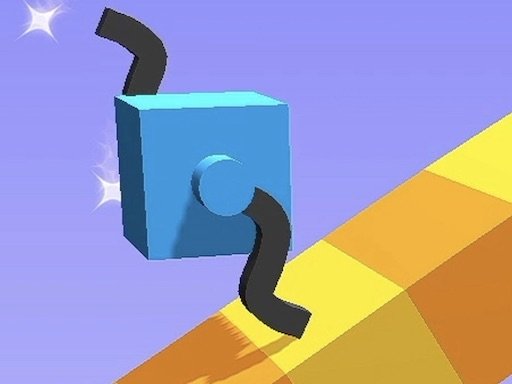
Draw Climber Puzzle Racing hands you a box with no built-in movement. Your only tool is a drawing mechanic: sketch legs directly onto the box using a finger on touchscreens or a mouse on computers. The shape, length, and thickness of those legs determine how the box walks, climbs, and balances. A long pair might scale a steep hill, while short, stubby legs could keep it steady on flat ground. The game pairs this creative freedom with a physics engine, so every stroke has measurable consequences.
Level Obstacles and the Finish Line
Each level places the box at a starting point with a finish line ahead. Between them sit hills, gaps, and other obstacles that punish poor leg design. The box cannot jump or steer independently; it relies entirely on the legs you draw. Cross a gap with legs too short and the box falls. Climb a hill with legs too thin and it topples. This trial-and-error loop forms the core of the puzzle-racing hybrid, pushing you to redraw and retry until the box reaches the end.
Controls and Accessibility
One-touch drawing keeps the interface simple enough for young children. No complex button combinations or timed inputs are required. The game runs on smartphones, tablets, and computers, and it remains playable offline after loading. Because the content stays family-friendly with no inappropriate material, parents can hand over a device without concern. The difficulty curve rises gradually, introducing new obstacle types that demand more inventive leg shapes.
Tips for Better Leg Designs
Watch how the box moves after each drawing. If it tips forward, try a wider base or shorter legs. If it cannot clear a hill, lengthen the legs or change their angle. Stability matters as much as reach. On flat stretches, compact legs often outperform long ones. When stuck, abandon your current design entirely and sketch something completely different. The game rewards persistence and creative thinking over brute-force repetition.
Compatibility
FAQ
Comments
Sign in to comment
You must be logged in before posting a review or rating.
No comments yet. Be the first to comment!



Editorial Notes