
Number Navigator: Oceanic Logic Quest
What players say
Number Navigator: Oceanic Logic Quest succeeds as an educational puzzle game by removing pressure. The branching island map lets players choose their own path through addition, subtraction, multiplication, and division. Thematic connections between island environments and puzzle types aid memory, while the absence of timers and leaderboards keeps the experience relaxed. It is best suited for children and beginners who benefit from self-paced learning, though older players may find the challenge limited.
How to play
Charting a Course Through Arithmetic
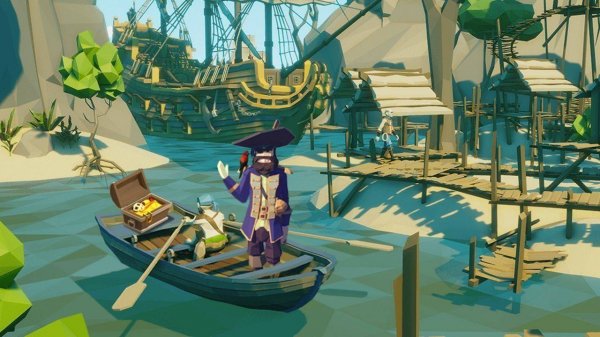
Number Navigator: Oceanic Logic Quest puts players at the helm of a small ship navigating a chain of islands. Each island presents an arithmetic problem that must be solved before the next route becomes available. The difficulty curve begins with addition and subtraction, then gradually introduces multiplication and division. This order lets beginners build confidence before they encounter more complex equations. The ocean setting—gentle waves and distant seabirds—reinforces a focus on thoughtful problem-solving rather than speed or competition.
Branching Routes and Map Progression
Instead of a single linear path, the game offers multiple routes between islands. Players choose their own sequence of challenges, and each solved puzzle adds a navigation point to the map. This design allows revisiting earlier islands to reinforce skills or skipping ahead when ready for harder problems. The map becomes a visual record of progress, with completed routes marked by a small anchor icon. Incorrect answers do not punish; they simply prompt a new problem, rewarding persistence over perfection.
Visual and Audio Accessibility
The art style uses soft, watercolor-like illustrations with large, clear numbers and answer choices. Buttons are oversized and well-spaced, making the game easy to navigate on tablets or phones. There are no timers or score counters that might create anxiety. Sound effects are limited to gentle chimes for correct answers and a soft wave sound for incorrect ones, keeping the experience calm and focused.
Thematic Learning Through Island Environments
Each island's puzzle type is tied to its environment. A coral reef island might feature pattern recognition problems, while a lighthouse island focuses on sequencing. This thematic connection helps players associate different math concepts with memorable visual cues. The game includes no competitive elements or leaderboards, making it suitable for children who prefer self-paced learning. Parents can expect purely educational content with no advertisements or in-app purchases.
Compatibility
FAQ
Comments
Sign in to comment
You must be logged in before posting a review or rating.
No comments yet. Be the first to comment!



Editorial Notes