
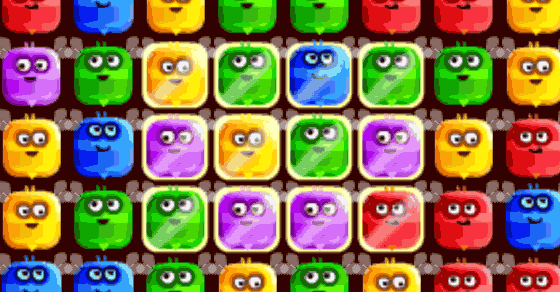
Golden Comb Puzzle Swap
What players say
Golden Comb Puzzle Swap stands out for what it does not do: no timers, no loud effects, no pressure. The challenge comes from using as few swaps as possible to clear every honeycomb square. Clustered layouts reward chain reactions, while spread-out boards demand broader planning. The bright, simple visuals keep focus on the grid. It suits casual players and puzzle fans who prefer thinking to rushing, though those seeking fast action may find the pace too gentle.
How to play
The Core Swap Mechanic
Golden Comb Puzzle Swap centers on a simple but consequential action: selecting two adjacent tiles and exchanging their positions. When three or more matching tiles line up, they vanish and award points. The real objective, however, is not just scoring—it is clearing every golden honeycomb square from the board. Because each swap consumes one move from your total, every exchange carries weight. The game rewards planning over reflexes, so you can take your time without penalty.
How Level Layouts Shape Your Approach
No two stages present the same arrangement. Some boards cluster honeycomb targets tightly, encouraging chain reactions that clear several squares at once. Others scatter them across the grid, forcing you to build matches in multiple regions before you can finish. This variation means you cannot rely on a single routine; you must read each layout and adjust your strategy. Over time, that repetition builds pattern recognition and flexible thinking.
Visual Clarity and Focused Presentation
The game uses bright, friendly colors and simple tile designs that remain easy to distinguish at a glance. Honeycomb squares glow softly, giving clear visual feedback when they are cleared. There are no distracting animations or loud sound effects, so nothing pulls your attention away from the board. The overall look is warm and inviting, suited to a relaxed session without sensory overload.
Progression Through Move Efficiency
After each level, the game tracks how many moves you used. That number becomes your benchmark. Since there is no timer or penalty for thinking, the challenge comes from solving puzzles with fewer moves than before. Improvement is gradual and self-directed: you set your own target by trying to beat your previous count. This gentle feedback loop keeps the experience rewarding as your skill grows.
Compatibility
FAQ
Comments
Sign in to comment
You must be logged in before posting a review or rating.
No comments yet. Be the first to comment!



Editorial Notes