
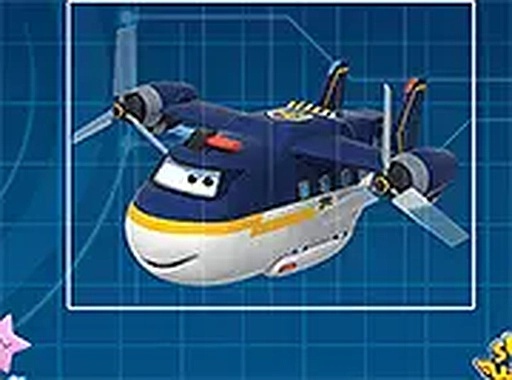
Air Rescue Jigsaw Fun
What players say
Air Rescue Jigsaw Fun keeps its focus narrow and does that well. The core loop is easy to understand: study a complete rescue-plane image, then drag scattered tiles back into position. Because there are no timers, scores, or failure states, the game suits children who prefer to work at their own pace. The gradual increase in piece count gives a clear sense of progression without overwhelming beginners. The main limitation is that the concept is deliberately simple, so older or more experienced puzzle players may find it too easy.
How to play
Rebuilding the Picture
Every round starts with a full view of a friendly rescue-plane illustration. That same image is then split into movable tiles and scattered across the screen. The player's job is to drag each tile to its correct spot until the original picture is whole again. Success depends on watching the target image closely and remembering where each fragment belongs.
How Difficulty Grows
Each level introduces a fresh scene, often a different aircraft or a bright background. Early puzzles use only a few pieces, so a young child can finish them without frustration. Later rounds add more tiles, raising the challenge gradually. That step-by-step increase lets children build observation and matching skills at a comfortable pace instead of facing a sudden jump in complexity.
Controls and Devices
Tiles respond to simple drag-and-drop input, whether the player uses a mouse click or a finger tap. The same build runs on desktop computers, tablets, and smartphones without any download or installation. A full-screen option enlarges the puzzle area when a clearer view of the pieces is helpful.
A Calm, Focused Space
The visuals are bright and colourful, with character designs aimed at young children. The interface stays clean and uncluttered so nothing pulls attention away from the puzzle. There are no timers, no scores, and no failure states. A child can work at their own speed, pause, or restart without pressure, which keeps the activity relaxed and focused on the picture itself.
What the Puzzle Trains
Comparing loose tiles against the target image exercises pattern recognition, spatial awareness, and short-term memory. Attention to detail matters because a tile that looks close may still sit in the wrong place. Finishing a puzzle gives a clear sense of accomplishment, which can encourage a child to keep going and try the next, slightly harder illustration.
Compatibility
FAQ
Comments
Sign in to comment
You must be logged in before posting a review or rating.
No comments yet. Be the first to comment!
Editorial Notes