
Urban Fusion Builder
What players say
Urban Fusion Builder delivers a straightforward merge mechanic wrapped in city-building progression. The strength is its clarity: place a building, tap to collect, drag identical pairs together, and watch tiers upgrade. Idle income keeps resources flowing between sessions, and the absence of timers or strict objectives makes it easy to play at your own pace. The main limitation is depth. Strategy is limited to collection timing, land purchases, and merge ordering, so players wanting complex systems or competitive challenges may lose interest. It suits casual players who like watching a small lot become a dense city.
How to play
The Merge Loop That Drives Everything
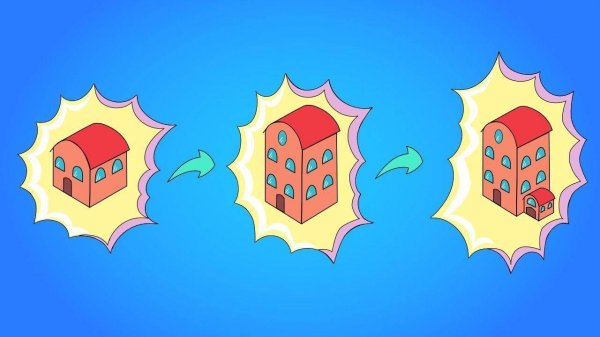
Urban Fusion Builder starts with a single empty lot and one basic residential building. That structure produces in-game currency, which you collect by tapping floating icons above it. The central action is dragging one building onto an identical one. The pair combines into a single upgraded building with a more detailed appearance and a higher production rate. Placing, collecting, and merging form the entire foundation of expansion. There are no timers or complex controls, so the pace is entirely player-driven.
How Merging Shapes Your City
Every merge produces a building of the next tier. Higher tiers look more elaborate and generate currency more efficiently, which creates a cycle: earn currency, spend it on more land or new buildings, then merge those to reach even higher tiers. Because merging requires matching pairs, the order in which you place and combine structures matters. Saving a building for a future merge instead of placing it immediately is a real decision that affects how quickly your city advances.
Idle Income and Layout Planning
Currency accumulates even when you step away, so returning players usually have resources waiting. The strategic choices involve when to collect earnings to purchase new land and when to hold buildings for future merges. Balancing immediate expansion against long-term combination goals adds planning without pressure. You also decide where each structure goes. Efficient layout planning helps maximize space and create a visually pleasing arrangement, and there are no strict objectives forcing a particular design.
Visual Progression and Building Variety
As merges accumulate, the city transforms through distinct visual stages. What begins as a small village gradually becomes a dense urban center, with each building tier having a unique look. New types of buildings and upgrade paths introduce variety, offering different production rates and visual styles. That variety encourages experimentation with different merge strategies while the core experience remains the satisfying cycle of earning, combining, and expanding.
Compatibility
FAQ
Comments
Sign in to comment
You must be logged in before posting a review or rating.
No comments yet. Be the first to comment!




Editorial Notes