
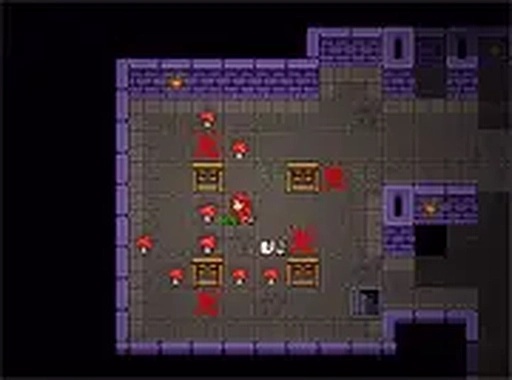
Dungeon Quest III: Turn-Based Strategy
What players say
Dungeon Quest III targets players who enjoy tactical decisions in short, self-contained sessions. Its procedural generation keeps each run unfamiliar, and the one-turn-per-action rule makes inventory and movement choices matter. The class variety adds replay value without demanding a long commitment. The main limitation is scope: it is a desktop browser game built around roughly one-hour completions, so anyone seeking a sprawling campaign or mobile play should look elsewhere.
How to play
Procedural Dungeons and Run Structure
Dungeon Quest III rebuilds its dungeon every time you start a new session. Room layouts, obstacle positions, and item drops are generated fresh, so a route that worked last run may be blocked or unrewarding this time. The game is balanced around a roughly one-hour completion target, which suits players who want a complete tactical challenge in a single sitting rather than an open-ended campaign. Because the map changes, success depends less on memorization and more on reading the current layout and committing to a plan before resources run thin.
Turn-Based Combat and Resource Management
Every action consumes one turn. Moving, attacking, interacting with objects, equipping gear, and drinking potions all advance the turn counter, which means enemies and environmental hazards respond after each decision. That structure turns inventory management into a tactical choice: a potion saved for later is a turn not spent repositioning, and a piece of equipment swapped mid-fight may cost the tempo you need. Players who plan several steps ahead and track what each turn costs tend to last longer than those who react one move at a time.
Classes, Enemies, and Replay Value
The game includes multiple character classes, and each plays differently enough that the same generated dungeon can demand a different approach depending on who you pick. Enemy variety and item discovery reinforce that replay loop: learning which classes handle certain threats well is part of the strategy, not a side note. Since the dungeon regenerates, no single class dominates every run, and experimenting with a new class is a reasonable way to find a playstyle that matches how you like to manage turns and resources.
Controls and Platform
Dungeon Quest III runs in a browser with full-screen support and requires no download or sign-up. Movement uses the arrow keys or WASD, while mouse clicks handle interactions, attacks, and inventory actions through an on-screen interface. It is built for desktop play, so a keyboard and mouse remain the most reliable input method. There is no timer pressuring your decisions, which gives you room to think through each turn before committing.
Compatibility
FAQ
Comments
Sign in to comment
You must be logged in before posting a review or rating.
No comments yet. Be the first to comment!


Editorial Notes