
Beat Pursuit Music Quest
What players say
Beat Pursuit Music Quest keeps the rhythm genre's essentials: read the arrows, hit the keys on beat, and protect the progress bar. Its original songs and detailed character artwork give the demo a distinct presentation, and browser play removes the usual setup barrier. The clear limitation is scope, since this is a demo rather than a full track library. Players who enjoy timing-based music games, or who like the game universe the artwork references, are the most likely fit.
How to play
What You Do Each Track
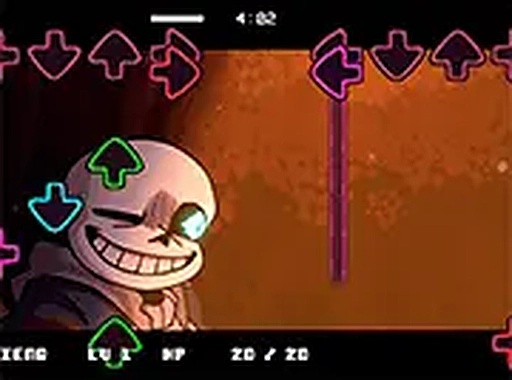
Beat Pursuit Music Quest is a browser-based rhythm game built around one repeating action: directional arrows appear on screen, and you press the matching arrow keys as the music plays. Timing is the whole skill. A well-timed press counts as a hit and pushes the progress bar upward; a missed or late press drags it down. Finish the song without letting the bar fail and the track is complete. Because the arrows are tied to the beat rather than random timing, learning a song's rhythm is the same as learning its note pattern.
Keyboard, Screen, and Session Setup
The game is designed for desktop play with a keyboard or mouse, and keyboard input is the primary control method. Full screen mode is available and is worth using: a larger, cleaner view makes the falling arrows easier to read and cuts down on surrounding distractions. [IMG_1] There is no download step, so a session can start as soon as the browser page loads. That low-friction setup suits short practice runs as much as longer attempts at a track you already know.
Original Music and Artwork
The demo version includes original songs with their own beats, paired with detailed artwork. The visual style draws on a well-known game universe, and the presentation is built around characters rather than an abstract note highway. [IMG_2] For players who already like that source material, the artwork and character framing are part of the appeal; for everyone else, the songs and the timing challenge are what carry the game.
How Difficulty Actually Shows Up
There are easier and more challenging tracks, and the sensible path is to start with the easier ones. Faster or denser note patterns leave less room to recover from a mistake, so the progress bar becomes less forgiving. Practicing a track repeatedly is the main way to improve, because familiarity with a song's structure lets you anticipate notes instead of reacting to them. [IMG_3] Missing notes is normal early on; the useful habit is to keep playing through a miss rather than stopping to correct it.
Compatibility
FAQ
Comments
Sign in to comment
You must be logged in before posting a review or rating.
No comments yet. Be the first to comment!




Editorial Notes